
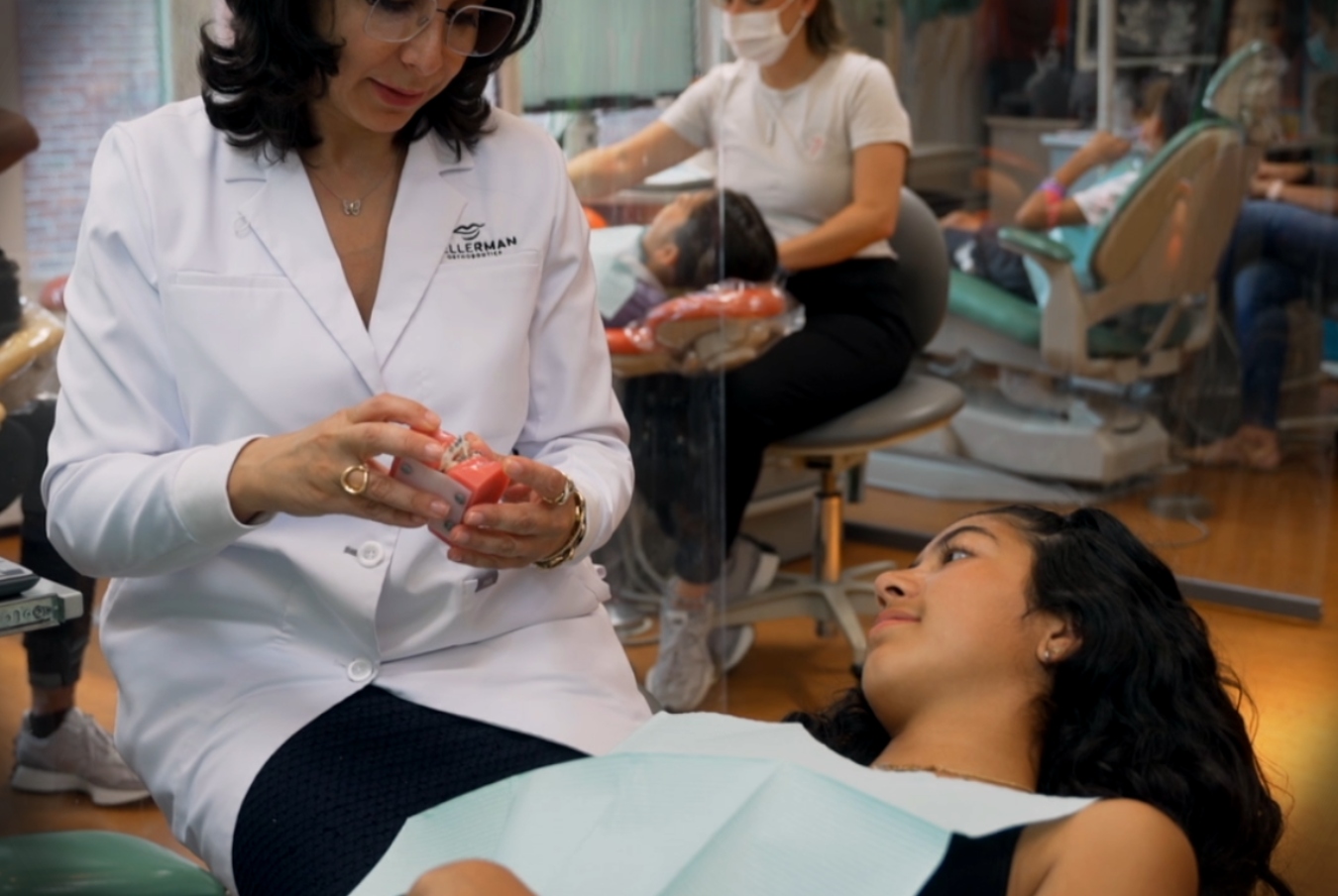
Braces can help with TMJ pain when a misaligned bite is straining the jaw joint, because moving the teeth into better position can take uneven pressure off the joint and muscles. They are not a cure for every kind of jaw pain.
Jaw pain, clicking and frequent headaches send a lot of people searching for answers, and orthodontics often comes up. At Gellerman Orthodontics in Huntington, we evaluate and treat TMJ disorders, also called TMD, as part of our practice. Here is how the jaw joint works, when bite correction helps and what other treatments are available.
What Is TMJ Disorder?
Your temporomandibular joints, or TMJs, connect your lower jawbone to your skull, one on each side of your face just in front of the ears. These joints get a lot of use every day as you speak, chew, swallow and yawn. When a joint is misaligned or under stress, the joint and the muscles around it can become painful and may even restrict how far you can open your mouth.
Common symptoms include pain or tenderness in the jaw, clicking or popping when the jaw moves, frequent headaches or migraines, and neck, shoulder or facial pain. Some people notice ear pain, ringing or a feeling of stuffiness in the ears. Others have trouble chewing, feel that their top and bottom teeth no longer fit together the same way, or find that the jaw locks open or closed.
Not all jaw pain comes from TMD. A toothache, a sinus problem or a sore muscle after a long day of clenching can feel similar. That is why an exam matters before anyone recommends treatment.
What Causes TMJ Problems?
TMD usually has more than one contributing factor. A misaligned jaw or an improper bite can place uneven pressure on the joints every time you bite down. Teeth grinding and clenching, known as bruxism, overload the jaw muscles, and they are often linked to stress. Arthritis in the jaw joint, an injury or blow to the face, and poor posture that strains the jaw muscles can all play a role as well.
Because the causes overlap, the treatment that works for one person may do little for another. Our approach is to identify the root cause first and then build a plan around it, rather than treating every case of jaw pain the same way.
Can Braces or Invisalign Fix TMJ Pain?
They can when the bite is part of the problem. If your teeth meet unevenly, or if the upper and lower jaws are out of balance, the joint and muscles may be working harder than they should. In those cases, braces or Invisalign can reposition the teeth and jaw for proper function, and correcting the bite can relieve some of that strain. A bite problem like a crossbite is one example where alignment and jaw comfort can be connected.
Orthodontic treatment is not the answer for every patient, though. Many people develop TMJ problems without ever wearing braces, and symptoms usually come and go whether or not braces are worn. If grinding, arthritis or muscle tension is the main driver, straightening the teeth alone is unlikely to solve the pain. That is why we look at the whole picture before recommending Invisalign or braces as part of TMJ care.
What Other TMJ Treatments Are Available?
Orthodontics is one tool among several, and many patients do well with a combination. At our Huntington office, TMJ care can include:
| Treatment | What it does | Often used when |
|---|---|---|
| Braces or Invisalign | Repositions the teeth and jaw for proper function | A misaligned bite contributes to the pain |
| Custom nightguard or splint | Prevents grinding and clenching, reducing strain on the joint | Bruxism or clenching is a factor |
| Bite equilibration | Adjusts how the teeth fit together to reduce uneven pressure | The teeth meet unevenly |
| Myofunctional therapy and stress management | Addresses muscle function and tension habits | Muscle tension or habits play a role |
| TruDenta | Targets improper muscle forces in the head, neck and jaw | Chronic headaches or facial pain are present |
When jaw pain is tied to a significant skeletal misalignment, surgical orthodontics may be part of the conversation. Our iCAT 3D imaging helps us evaluate the jaw joints, bite and airway when a case calls for a closer look.
How Does TruDenta Help With TMJ Headaches?
Many patients with TMD also deal with tension headaches. TruDenta is a drug-free, needle-free approach that uses techniques derived from sports medicine to target the muscle forces in the head, neck and jaw that can cause pain. It begins with a computer-assisted evaluation to help pinpoint what is behind your symptoms.
Based on those findings, a personalized in-office treatment plan is prescribed. Sessions last about 50 minutes, and depending on the severity of your diagnosis, treatment may involve one to 12 weekly visits. Learn more about TruDenta headache relief and who it is designed for.
What Happens at a TMJ Evaluation?
An evaluation starts with a conversation. We ask about your symptoms, when they started, what makes them better or worse and whether you grind or clench your teeth. Headaches, ear symptoms and neck or shoulder pain are all worth mentioning, even if they seem unrelated to your jaw.
Next comes an exam of your jaw movement, the muscles around the joint and the way your teeth fit together. When a case calls for a closer look, 3D imaging lets us evaluate the joints, the bite and the airway in detail. If TruDenta may help, its computer-assisted evaluation adds another layer of information about the muscle forces involved.
From there, we explain what we found and recommend a plan. That might be a single treatment, such as a nightguard, or a combination that pairs bite correction with therapy. In severe cases, we work with pain management specialists, physical therapists and oral surgeons.
What Can You Do at Home to Ease Jaw Pain?
Small daily habits can reduce strain on the jaw joint, whether or not you need treatment. Relax your face with the cue "lips together, teeth apart." Avoid grinding your teeth and skip chewing gum. Chew your food evenly on both sides of your mouth.
Posture matters too. Do not cradle a phone between your head and shoulder, avoid resting your chin on your hand, and keep your head up, back straight and shoulders squared. If symptoms continue, early evaluation can help keep the pain from getting worse.
Pay attention to patterns, too. If your jaw is sore when you wake up, you may be clenching or grinding at night, which is worth mentioning at your next dental or orthodontic visit. Pain that keeps returning, a jaw that locks or a bite that suddenly feels different are signs to have it checked rather than wait it out.
Frequently Asked Questions
Can braces cause TMJ problems?
Many people develop TMD without ever wearing braces, and symptoms tend to come and go whether or not braces are worn. If you notice jaw pain during treatment, tell us at your next visit so we can check your bite.
How do I know if my jaw pain is TMD?
Not all jaw pain is TMD. An exam is the only way to know. If you have symptoms such as clicking, headaches or limited opening, let your dentist or our team know so the cause can be evaluated.
Is a nightguard enough for TMJ pain?
A custom nightguard or splint can prevent grinding and clenching and relieve strain on the joint. Some patients also need bite correction, therapy or other care, depending on what is causing the pain.
Do adults get orthodontic treatment for TMJ?
Yes. When a misaligned bite contributes to jaw pain, adults can benefit from braces or Invisalign. You can compare the options for braces for adults before your visit.
Schedule a TMJ Evaluation in Huntington, NY
If jaw pain, clicking or frequent headaches are affecting your day, we can help you find out why. TMJ and TMD treatment in Huntington starts with an evaluation of your jaw, bite and symptoms, followed by a plan built around the cause. Call or text us at (631) 427-8444 or contact our Huntington office at 165 Main St. to set up a visit.